
Proper worksite illumination involves more than just plugging in a few light towers and turning them on. For contractors and foremen managing demanding industrial environments, construction zones, or hazardous areas, strategic light placement is a fundamental safety protocol. Poorly positioned lighting creates shadows, intense glare, and blind spots—all of which increase the risk of workplace incidents.
These lighting placement tips detail how to position portable lighting effectively, so you can protect your crew, improve operational accuracy, and maintain a highly productive job site. And our Texas Portable Lighting products are designed to meet all lighting needs.
High-Output Overhead Lighting: Eliminating Shadows
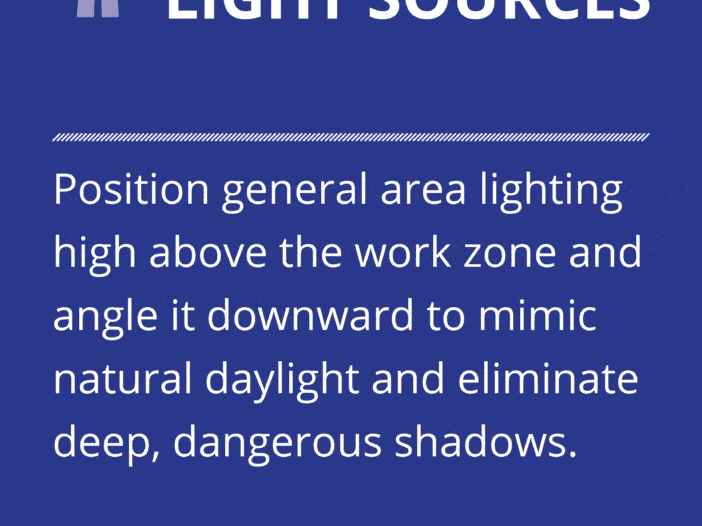
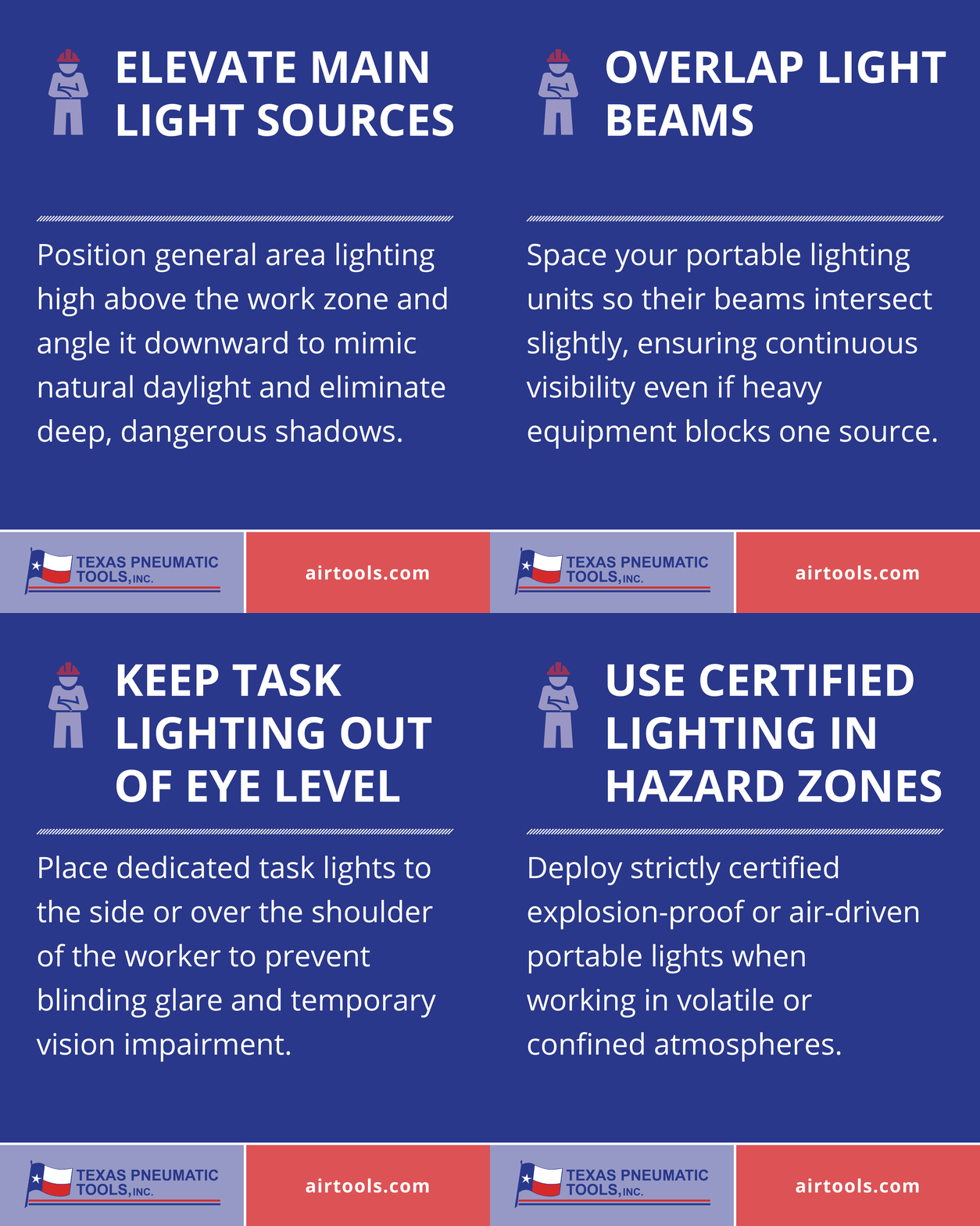
The primary goal of general area lighting is to mimic natural daylight as closely as possible. To achieve this, high-output lights should be elevated and angled downward toward the work zone.
- Height Matters: Positioning light sources at a higher elevation allows the illumination to spread evenly across the site, minimizing the long, dark shadows that occur when lights are placed at eye level. Our Texas Portable Lighting line includes flood lights, high bay lights, light carts, and other stand options to deliver the height required.
- Overlapping Fields: Space your light towers or high-output portable stands so that their beams overlap slightly. This cross-illumination ensures that if a worker or a piece of heavy machinery blocks one light source, a secondary light fills in the gap, keeping the workspace clear and visible. With Texas Portable Lighting, a variety of explosion-proof hand lamps and strings lights are available to provide the exact spacing you need.
Task-Specific Lighting: Precision Without Glare
While overhead lighting handles the broader environment, specific tasks require dedicated, close-range illumination. This is especially true in confined spaces or complex mechanical environments.
- Avoid Direct Eye Alignment: Position task lights to the side or over the shoulder of the worker rather than directly in front of them. Direct, blinding glare can cause temporary vision impairment, which is a major safety hazard on a busy site.
- Utilize Specialized Equipment: For internal tank work, sandblasting, or tight utility spaces, specialized tools like the Pneu-Light—an air-driven explosion-proof light—provide bright, concentrated illumination exactly where the work happens. Because it operates on compressed air, it eliminates electrical ignition risks while delivering targeted visibility.
Safety First in Hazardous and Explosion-Proof Zones
Refineries, chemical plants, and grain silos present unique environmental challenges. In these spaces, lighting placement must prioritize volatile atmosphere safety alongside basic visibility.
- Match the Rating to the Environment: Ensure that all portable lighting used in confined or potentially explosive atmospheres carries the correct Class and Division certifications.
- Secure Placement: Position explosion-proof portable lights on stable, non-reactive surfaces where they cannot be easily knocked over by foot traffic or moving equipment. Keep power cables and air lines neatly routed along the perimeter of the workspace to prevent trip hazards. We’ve created an Upright Light that’s been tested in drops and kicks to ensure safety in dangerous situations like these.
Proper lighting placement is a simple, highly effective way to safeguard your crew and ensure every shift runs smoothly. Review your lighting layout at the start of every project to keep visibility high and risks low.
Contact us today to light your job site!
Want More Insights from the Job Site?
Don’t miss out on the practical knowledge that drives your industry. Subscribe to the Texas Pneumatic Tools Newsletter for exclusive news beyond the year in review. We cover customer case studies, deep dives into compliance solutions (like dust control), the latest stories proving the reliability of American-made air power, and more.